I just finished a solo version of Kaiju Conquest on TTS. The UERF side won 126 to 67 for the Sazzarran. The game was played in 76 minutes. I had some decent die rolls for the Sazzarran but not quite enough to make a difference.
Sunday, 14 March 2021
SOLO PLAY
Sunday, 22 November 2020
TABLETOPIA TEST
<iframe width="680" height="340" frameborder="0" allowtransparency="true" scrolling="no" src="https://tabletopia.com/workshop/widget/kaiju-conquest-r4qr8n/680x340"></iframe>
Friday, 13 November 2020
GAME PLAY VIDEOS - PART 1
For the last 2 weeks I was on isolation because a co-worker had been tested positive for COVID. At this time I don't know his situation. Hopefully okay. I did come out of it okay, but those two weeks gave me the opportunity to create my game play videos.
There were a total of six videos. The first four were Game setup and components, Draw Cards Phase, Resource Phase and Movement Phase. Each were from 2 minutes to 4 minutes long. It took me at least 10 hours of multiple takes to get the right footage. I would have love to do multiple angles while taping, but I only had one good camera I was borrowing from my daughter, a tripod and two light stands for extra lighting.
It was to be a top down view of the table. This way you get to see everything, at least.
![]() |
| My setup with tripod and one of the lamps visible. |
![]() |
| This was during the Battle Phase video. |
The last two videos were Battle Phase and End Phase. Those took me another 12 hours and at least 30 takes to get it to the point I was satisfied. Once I had all the videos completed, it was time to start editing. I currently use Pinnacle Studios 17. I have been using and upgrading that program for at least 14 years now. I have tried a couple of others and this one works best for me.
It was easy to edit the first four videos, but it still took me another 10 hours to edit all of them. I am using a laptop that is four years old now. The problem I found during the editing process is that I would have to wait practically a full minute after making an edit before I could make another edit. But at least they were done to the point I could add simple changes to them, Part of the problem may be my laptop cannot handle processing all that audio video data since it is four years old. But I will keep using it until it totally crashes on me.
The Battle Phase edits have taken me at least 37 hours now. The video is almost 15 minutes long. The original was 18 minutes, so I had room to make the required cuts. Once again it was painstakingly slow because of waiting for it to update after each edit.
My plan is to get the videos completed within the next week now that I have to gone back to work. However, luckily next week I will be visiting family in Calgary and may have some time to do final touches.
Once the videos are done, I will be posting them on my Youtube channel and then advertising their link on my FB pages. More to follow when they are done.
Wednesday, 4 November 2020
THE RAVAGER (aka Giant Ape, aka Shimen Kolata)
This is one of the smallest Kaiju. It was originally called a giant ape by the humans but later given the moniker of Ravager due to it ravaging its way through towns, villages and cities.
Height: 40m
Primary Role: Front line assault
Abilities: Very agile in forests such as the Redwoods in California, USA, and adept at using tall structures in cities as cover.
Description: Normally a friendly species. They have a simian appearance. Their hair is a mix of browns and blacks, with blue feet, hands and chest.
Background: The Shimen Kolata are native to the world of Byndazii. Byndazii is a temperate world, with a mix of desert, mountains, jungles, and arctic tundra located on a few large continents. There are also many islands spread throughout the ocean. The Shimen Kolata prefer to inhabit the rain forests and mountainous terrain. The rain forests on Byndazii can reach over 100m in height.
The Shimen Kolata enjoy leaping and climbing about these trees. There is another intelligent species on Byndazii called the Ferook. Where the Shimen Kolata are 40m tall, the Ferook are about 2m tall and also simian in appearance. The Ferook have a light coating of striped and spotted fur that is unique to their species, much like the Shimen Kolata.
When Sazzarran "diplomats" appeared on Byndazii, they were amazed at the variety of species, especially the Shimen Kolata, when they were able to see them. It seemed the Shimen Kolata were a timid sort, considering their size. Bit it was soon found that they are protective and very ferocious when they, and especially their family, is threatened.
The Sazzarran engaged in conversation with the Ferook, which was mainly sign language and took many months for their linguists to understand. The Sazzarran wanted the Ferook to help them capture some of the Shimen Kolata, but the Ferook would have nothing to do with it. The two species lived well together and preferred to leave one antoher alone. When the Sazzarran started to threaten and torture some of the Ferook, the Shimen Kolata took notice and attacked the Sazzarran.
Many of the Sazzarran were slaughtered, but so were some of the Shimen Kolata and many Ferook. The remainder of the Sazzarran departed Byndazii, only to return with a much larger force and manage to capture many of the Shimen Kolata as well as the Ferook.
It was later that the Sazzarran scientists discovered that the Shimen Kolata and the Ferook were of the same species. Apparently, after many years of adulthood, the Ferook depart their community and disappear into the rain forests and mountains. Over a period of several years, they eventually grow into the Shimen Kolata.
When nature calls, the Ferook respond and have to leave their community or risk causing damage and suffering to their people when they start growing and become less intelligent. The Sazzarran can now tap into that resource as much as possible when they need a pool of war beasts for their invasion of new worlds.
Sunday, 25 October 2020
SO CLOSE YET SO FAR
Since my last post, I have finally inserted Kaiju Conquest into Tabletopia and Tabletop Simulator. I had bought the platforms about 3 years ago and at the time I was having difficulty using them. Since then I watched more tutorial videos and it was easier than I thought. It seems TTs is more popular than Tabletopia, but I wanted to have both platforms for those people who are more comfortable with using one or the other.
I sent my game for quotes to several Chinese manufacturers. They were WINGO, NINUX, Magicraft, Longpack and Whatz Ganes. The results are about the same between them. It is just a matter of which one I want to choose. More to follow on that.
I received actual 3d models of each of the mecha and kaiju. I will not start posting them until after I get the landing page setup.
I have been trying to post regularly on Facebook, Instagram, and Twitter, but it is not easy considering I still work full time and have other domestic considerations that take priority. Currently posting once per week. The problem is I don't like "spamming" myself a lot and I am not getting a lot of Likes or responses anyway. I wonder if it is worth it sometimes. But I keep trying.
Currently, I have paid someone to help me with setting up a landing page to begin proper email subscriptions in order to gain a following for Kaiju Conquest. I can only hope it works. I will post it on here soon.
I feel I am getting closer to the Kickstarter launch for Kaiju Conquest, but I know I have a long way to go yet. This is a list of what needs to be done:
1. Publicize the landing page.
2. Send weekly newsletters to those who have subscribed on the landing page.
3. Promote the game as much as possible on FB, Instagram, Twitter.
4. Promote the game online with Tabletopia and Tabletop Simulator.
5. Confirm which Chinese manufacturer I will choose.
6. Contact shipping and fulfillment companies. I need to choose about four to distribute around the world.
7. Contact boardgame reviewers to review Kaiju Conquest. This will be done either through physical copies or online with Tabletopia and TTS.
7. Pay someone to help create my Kickstarter page. I am very weak in graphic designing.
8. Create a Kickstarter pre-launch promo page.
9. Launch Kickstarter once I can confirm I will have anywhere from 300 to 500 followers.
I was planning for May 2021, but it really depends on the number of followers I get who will be backing the game. I cannot launch the kickstarter unless I get that minimum number in order to reach the funding goal, either within 3 days or at least by the end of the Kickstarter.
I have created a new email account just for ATC Games, advtocontact@gmail.com. You can contact me by email or currently on Facebook at ATC Games, https://www.facebook.com/advtocontactgames/
Friday, 10 July 2020
NEW GAME LAYOUT
Thursday, 9 July 2020
THE LATEST GAME LAYOUT
Since then I have once again improved the rulebook, gameboard and components as follows:
The rulebook is 24 pages now. Here are a couple of page examples.
Last year, in September of 2019, the group from GNork Games offered to playtest my game. They provided a pre-game video, gameplay video and their thoughts after, Although it may have been hard to hear some of the points they made, it allowed me to make significant improvements to the rulebook and game mechanics. However, it took me almost a year to do it with some playtesting.
So, now I hope I have something more stable, logical and easy to read.
This was the gameboard as of September 2019.
This is the latest version.
The differences are as follows:
The Resource Trackers. I converted from four to two, one on each side, but having more points to score on the tracker, being 25 now instead of 20, and each player using one Tracker token instead of two each. Having one Tracker on each side with two players on a side to share became easier to manage.
The second thing changed was I added the stats for the Military Units (MUs) on the brushed metal half hexes on left side of the board.
The third thing was modifying the VP and RP charts.
The MECHA and Kaiju character cards were changed significantly. Last year, the cards had a Healthy side and a Damaged side, with a different special ability on each side. Apparently, it became a little difficult for the players to understand the abilities and manage the damage on the cards.
So, I improved them by only having the same stats on both sides of the card but the abilities are different. This means the players must choose which ability they want to play. Think of it like picking between 16 MECHA or Kaiju than only 8 of each.
The Target City cards are now called Target Zone cards and I have added cards for deploying in sea and land zones. This allows the Sazzarran player more options to deploy their forces, especailly if they do not want to deploy into an enemy occupied zone.
The Tactic Cards were changed from this:
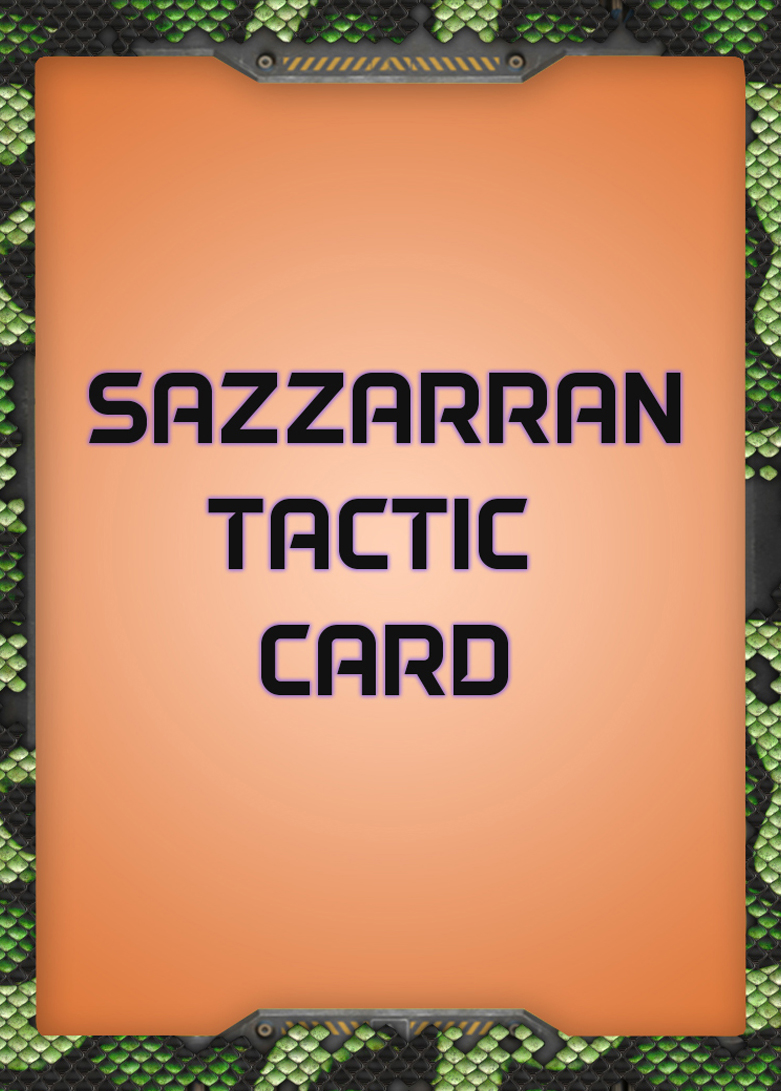
To only changing the back of the cards to this. The left is the Sazzarran Tactic Card and right is the UERF Tactic card.
Lastly, the MUs were double sided with the same image on both sides. I changed that so that they other side now has a Damaged icon. During the Battle Phase, as the UERF forces are hit first, they needed to be turned over to a destroyed side before being removed because they still get to attack as combat is considered simultaneous, with exception of certain rules, such as using Nukes or Bio-Bombs.
So, now each MU looks like this with Sazzarran Mu example below.
That is pretty well it for the changes. This had vastly improved game play.
You may notice that the image I have of the gameboard and component layout on the page header is the previous version as of September 2019. I will eventually be replacing that with the new one.
My next blog will be about the 3d models.
Monday, 12 November 2018
KAIJU CONQUEST LATEST GAME PLAY 11 NOV 18
![]() |
| Thee blips and decoy are not final images. |
Friday, 1 June 2018
SESSION 6 OF A REVISED KAIJU CONQUEST
In fact, the game has been played about 10 times since my Session 5 blog post. For this blog, I will only talk about the last two games played based on each Phase of the game.
CORE GAME OBJECTIVE: The Sazzarran player must destroy or control as many cities as possible in 6 game rounds. The UNRF player must control as many cities and land zones as possible while preventing the Sazzarran player from destroying the cities.
Victory Points are half of the Hit Point (HP) value of a City (rounded up). Land zones are 1 VP.
Sazzarran Player get full VPs (half the city HP value) for each destroyed city and 1 VP for each city controlled but not destroyed.
UNRF player gets full VPs for each undamaged or damaged city they control, and only 1 VP if they control a destroyed city zone.
If any force from both sides are in the same land or city zone, neither side gets any VPs.
When playing a four player game, players on the same side with their forces occupying the same zone get full VPs.
SETUP: The UNRF player gets to place all 12 of his Military Units (MUs) on the board. He can place them on any city, land or sea zone, although the cities are preferred to protect them against attack from the Kaiju.
PORTAL PHASE: The only change is the Sazzarran player gets to draw four Target City Cards, choose two of the cities, and discard the other two. If the UNRF player has the Crimson Valkyrie in play, and rolls a 4 or better on 1d6. then he gets to look at all four cards before the Sazzarran player chooses his two target cities.
RESOURCE PHASE: Both players draw five Tactic Cards. On 2nd and following game rounds, the players discard any cards, then draw back up to five cards to use in Resource and following phases for that game round.
Both players receive their Resource Points (RPs) for that round, and build their respective MECHA, Kaiju and Giant Steel/Shield Walls (GSWs). The Sazzarran player cannot build any GSWs until the 2nd game round, once he has zones controlled. Once a GSW is built and placed on the game board in a zone they control, the players get to place one of their MUs with each GSW. MUs are no longer "bought", but are automatically received. For the Sazzarran players, they get two MUs deploying with each Portal. For both players they get one MU each game round for each of their GSWs in play, including the Resource Phase that they were built and placed.
MOVEMENT PHASE: Sazzarran Portals are placed at the Target Cities and Sazzarran forces and Kaiju are moved first followed by movement of UNRF MECHA and MUs. Forces from both sides can move to any zone, whether friendly, neutral or enemy occupied in this phase.
BATTLE PHASE: Combat starts from top left hex zone, covering each hex column and going all the way to bottom right hex zone on the board.
There is still a maximum of 10 dice used, but if the total attack value is more than 10 from one side in a battle, then that player gets to use the excess as re-rolls. For example, if they had total of 12 attack, then 10 dice would be rolled and two of those dice could be re-rolled once.
After the dice are rolled, the players indicate if they are using any of their Tactic Cards. They place them face down in front of them. Once all Tactic Cards are placed, they are revealed. The Cards that have the die number of 6 are activated first to those that have a die number of 4 listed on them.
Players also use their dice to activate any abilities on their MECHA or Kaiju.
The dice results are used starting with the 6s and going down to the 1s. This way, the Sazzaran or UNRF player can destroy an opposing player's GSW with a 6. For the Sazzarran player this allows for any rolls of 1 to 3, and any 1s from the UNRF player to take effect as city damage. For the UNRF player this allows them to take control of the city zone if they manage to destroy all the Sazzarran MUs and Kaiju in the zone.
There is only one round of battle from all MUs MECHA and Kaiju in each zone, whether they are destroyed or not.
RE-DEPLOYMENT PHASE: This had to be brought back into play. The main reason being so it allows the MECHA and Kaiju to move back to a friendly zone with a GSW to heal/repair to full health.
The UNRF player moves his MUs and MECHA first, followed by the Sazzarran MUs and Kaiju. A player can only move their forces to a friendly or neutral zone, and cannot move through a zone occupied by opposing forces.
END PHASE: No change. This phase is used to determine if the victory conditions have been met. If so, the game ends. If not, the game continues until the game round indicated for the scenario, or certain victory conditions are met by either side.
Playing the game as indicated above worked out well so far. Gaining MUs based on Portals and GSWs in play still balances the game, especially with the UNRF player having all his MUs placed on the board on Round 1.
Using excess attacks as re-rolls also helped. It allows the players to put more of their forces into battle than being restricted in a 10 attack limit.
The victory conditions seem to be working so far.
The first game was UNRF 20 VPs and Sazzarran 18 VPs with 9 cities destroyed. You would think the Sazzarran player would have won with that many cities destroyed, but the UNRF player managed to have control over some of them, depriving the Sazzarran player of more VPs.
The second game was only played to Round 3 because the player had to leave, but the Sazzarran forces were losing with only 3 VPs at that point in the game.
The Sazzarran forces have to be played aggressively if the Sazzarran player wants to maximize damage to the cities and control as much as possible, forcing the UNRF player to split his forces to counter the Sazzarran advance.
That is all for now. Please provide comments/questions below about the game if you have any. Also, please Like and Share my ATC Games page, especially if you like this style of game.
Monday, 14 May 2018
SESSION 5 OF A REVISED KAIJU CONQUEST
1. The Objective was to control the most zones, earning VPs. Land zones were 1 VP, City zones were half their HPs (rounded up), and destroyed city zones were 1 VP.
2. Trying out the Resource Points being earned on the odd numbered rounds. There were six rounds in the game, with 20 RPs on Round 1, 15 RPs on Round 3 and 10 RPs on Round 5.
3. I would not be using the Tactic Cards for this game as I wanted to see how it would play out without them. Also, because the Tactic Cards were not used, I tried an older version where the RPs would be used for movement and extra dice rolls.
4. There were no Bases to be bought in the game. Each city would be its own Base. Even if the Sazzarran player were to control the zone, they would get the benefits of using the city as a Base for themselves. Which really means when a MECHA or Kaiju is in a city zone they control, they can use RPs to heal back to full health by spending half the Build Value of MECHA or Kaiju.
5. The UNRF player would start on Round One with one Military Unit (MU) at each land and city zone on the game board, which actually covers all of them (24 zones). These would not be paid for in RPs.
6. Both sides an use RPs to get the GSWs (Giant Steel/Shield Walls) to protect the cities from the opposing forces.
7. Lastly, each battle would be played until only one side or the other remained in the zone.
The first game lasted almost 60 minutes exactly, and that was with me playing as four people. The RPs on the odd numbered rounds did not work for me as by Round Four I had no points to spend on either side and there were no battles to occur. A dead round. At the end of Round Six, there were barely any forces from either side on the game board. I would go back to playing one turn of battle between players at each zone rather than elimination. The Sazzaran side won the game with a lot more Victory Points than the UNRF side.
During the next game, I went back to the following:
1. The Objective was still the same: to control the most zones, earning VPs. Land zones were 1 VP, City zones were half their HPs (rounded up), and destroyed city zones were 1 VP.
2. RPs being available on all six rounds, starting at 15 RPs on Round One to 5 RPs on Round Six.
3. I still did not use the Tactic Cards for this game, but I went back to using the dice to activate the special abilities of the MECHA and Kaiju.
4. No Bases to be bought., The cities would be the bases.
5.The UNRF player would start on Round One with one Military Unit (MU) at each land and city zone on the game board, which actually covers all of them (24 zones). These would not be paid for in RPs.
6. Both sides can use RPs to get the GSWs (Giant Steel/Shield Walls) to protect the cities from the opposing forces.
7. Each battle would only be fought once in each zone. So there could still be surviving units from one or both sides at each zone.
The second game lasted just under 70 minutes. The Sazzarran forces won again.
1. The Objective and VPs still works.
2. RPs being available for all six rounds was more ideal.
3. Not having the Tactic Cards made game play quicker but less thematic and flavourful.
4. Having the cities as bases of operation was good. It allowed the UNRF player to deploy his MECHA and MUs at any city he still controlled. It also allowed the Sazzarran player to use them to deploy and heal their Kaiju when they were able to control a zone.
5. Having all the UNRF MUs deployed on Round One helped.
6. The GSWs were still a good idea in the game. The UNRF were able to build a couple each Round to protect their cities and hopefully claim the VPs for them a the end of the game if they still had control (Just having a friendly GSW in a city zone would give control to that player).
7.The battles only being fought once in each zone allowed more MUs, MECHA and Kaiju to last longer and at least have more on the game board by the end of Round Six to control zones.
Yesterday, I had my daughter, KeleighAn, and her boyfriend, Justin, over to conduct a 3-player game. They each played the UNRF as I played all the Sazzarran. I wanted them to play the UNRF this time, as they usually win a game.
The game was played the same way as the points listed for my second game. The game lasted about 63 minutes. They won the game as the UNRF with more VPs, mostly in city zones controlled. They used a good tactic by building the GSWs as much as possible to protect their cities. Myself as the Sazzarran forces just could not get enough rolled 6s to destroy those walls.
So, it is possible for the UNRF side to win, if working together and using good strategy to repel the Sazzarran invaders. KeleighAn and Justin had played the game before using the Tactic Cards, and would still prefer to have them played in the game, even if the game lasted a little longer. It does allow me to use the Tactic Cards as a possible Stretch Goal, or just Advanced rules when I go to Kickstarter.
If the game continues playing well like this, I will soon be able to get prototypes made to send out to Indie Game Alliance. I still need blind playtesters to try it out before going to Kickstarter.
Thursday, 10 May 2018
SESSION 4 OF A REVISED KAIJU CONQUEST
On May 9th, I setup a demo at Board N Brew Café, a local game store. There were three people who came to play; Carter, Justice, and Marius who is one of the store owners. This game would be four players with me as a fourth. Originally, I wanted to try out a three player game, since that has not been done yet, but I decided to try it next time.
The objective for this game was to be the players with the most zones controlled by the end of game round six (I still prefer to say game turn, vice game round, as it sounds better to me, but that is not the preferred method now). The UNRF players were Carter and Justice. The Sazzarran players were Marius and I. While we were working together in our teams to get the most controlled zones, there would still be competition to be the single player to have the most controlled zones as well.
We played three game rounds before calling it quits. The game had lasted 90 minutes by that time, although there were delays with Marius having to serve other customers and short discussions on the cards and game improvement. The actual time may have been closer to 70 minutes. But even for three rounds that was still too long for what I was trying to achieve.
The two biggest things I was looking at for this game was game time and using the Giant Walls. There were labeled as GSWs for short: Giant Steel Walls for the UNRF and Giant Shield Walls for the Sazzarran. The GSW tokens were double-sided hexagons with an open space in the center to place over the city images on the board, and they had a steel surface image for the UNRF GSW on one side and a yellow cross hatched side to represent the GSW for the Sazzarran.
![]() |
| UNRF Giant Steel Wall on the left, and Sazzarran Giant Shield Wall on the right. |
So, game time was still too long. If this was a two player game it would have lasted 60 minutes for sure with experienced players. For a four player game and three of them not knowing all the capabilities of the cards it would of course take longer to play. So I am looking at 60 to 180 minutes game time.
In order of the Phases, these are the points we found:
PORTAL PHASE: The Harpoon and Crimson Valkyrie MECHA cards each have a Special Ability to look at the top one or two cards of the Target City Deck so the UNRF players have an idea of what Cities the Sazzarran forces may appear through their Portals. The cards stated to use during the Resource Phase. I have to change that to state using during the Portal Phase.
We tried a new method of the Sazzarran players drawing two Target City Cards each, choosing one of those cards as their Target City. The other card would be placed facedown at the bottom of the Target City deck. By doing this, the Target City deck could be used up by game round 4. The players would have to shuffle and could possibly draw some of the same target city cards during rounds 5 and 6, or even later rounds if playing other scenarios that could last up to 10 rounds.
This new rule added with the Harpoon MECHA being in play allowed the UNRF players to look at one of the players' hands. If the Crimson Valkyrie was in play, the UNRF players could look at both hands of the Sazzaran players to see all the city choices. So the UNRF players could see as many as four possible target city destinations but only two of them would be the Portal location. This ruling seemed to work during the game, so I will be using that again for future games, until something better comes along.
RESOURCE PHASE: The players would normally receive 15 Resource Points (RPs) on the first round, 13 on the second, 11 on the third and so on to the 6th round where they each receive 5 RPs each to build their forces. Having added the GSWs to the game and hoping they would get used, I figured we would each get 6 more RPs for each round. The end result of that was by the third round we had all our Military Units (MUs), MECHA, Kaiju and nearly all the Bases on the game board with about 7 GSWs.
That turned out to be way too much on the board. So, I will go back to 15 RPs starting. However, Justice came up with the idea of having RPs available every second round. For example, it would be something like 20 RPs each on Round 1, 15 RPs on Round 3 and 10 RPs on Round 5. This way, the players are practically forced to save some of their RPs for future rounds. That method will be tried in the next gaming session.
In all the games played including this one, the UNRF would need to buy Bases. The Sazzarran would start with Portals, but could also buy Bases once they controlled a zone. I found that the Sazzarran were still winning most of the time, and it may be because of the Portals and being able to get Bases. Therefore, to try and balance the next game, the UNRF will no longer need to buy Bases, but can deploy their forces from any city zone. Also, they can deploy their MUs and MECHA at any zone on the board on the first round. Buying the GSWs will also fortify their city zones to prevent the Sazzarran forces from destroying or controlling the city zones. The Sazzarran players would not get Bases, but would still use the Portals and when controlling a zone can buy and deploy their own GSW to provide protection while deploying their forces from the zone in future rounds.
The GSWs were each worth 3 RPs. This seemed to work for cost. They would protect a city zone from being damaged during the Battle Phase. More details on that in the comments for the Battle Phase. During the game there were about 7 GSWs on the board, but that was because of the extra 6 RPs the players had. Take that away, and it may not be as easy to get GSWs. But that is the option the players have in getting Bases, MECHA/Kaiju, MUs and now GSWs. After the game it was recommended the GSWs be reduced to 2 RPs each, especially if we lower the availability of RPs to every second round. Something to try out the next gaming session.
The last step of this phase was for the players to draw as many Tactic Cards as they each have MECHA, Kaiju or Bases in play. For example, if a UNRF player had one Base and two MECHA, he would draw three Tactic Cards. The maximum allowed is five cards. The players are allowed to discards any Tactic Cards, then draw back up to maximum five depending on number of Bases, MECHA or Kaiju they each have in play. The players are then allowed to use any Resource Phase Tactic Cards before going to the Movement Phase. This seemed to work so far. I will keep this method for the next gaming session.
MOVEMENT PHASE: The movement for the MUs was reduced from 2 to 1 zone per round, unless using a Movement Phase Tactic Card which can allow for more Movement points. This seemed to work as before the MUs were able to move quicker around the board. However, I may go back to 2 Move per MU to allow for quicker movement and enemy engagement on the board.
The movement of the MECHA and Kaiju seemed to work. They had an average Move of 3 zones, with some moving as much as 4 or 5 zones. There were also Movement Tactic Cards to allow MECHA and Kaiju to move further across the board.
BATTLE PHASE: This was where the game play slowed down, especially when by the third round, there were about 10 city zones occupied and at least 7 of them were contested that a battle had to take place. Only playing one turn of battle between players at each zone still works, especially to keep the game going and not being bogged down trying to eliminate each other in each zone. Also, having more RPs to buy units did not help. Less units on the board means less to destroy, and easier to control.
Using the Special Abilities of the Bases, MECHA and Kaiju, as well as the Tactic Cards further slowed down the momentum of the game as the players had to take the time to determine if they wanted to use the abilities/cards depending on their die rolls. Some abilities/cards could only be used if a certain die number was rolled. For example, the Nuke Em All card required two rolls of 6 to be used to activate the card. So, the players had to strategize if it was worth sacrificing dice to activate an ability or card.
An idea that developed from that was to use RPs instead of the die rolls to activate the Special Abilities and Tactic Cards. The RP cost would be listed by the ability on the cards. The players would have to save RPs in order to use these abilities. The Pro is that the players do not have to sacrifice dice to try and get better attacks, etc, and can actually use the dice to do their regular hits. The Con is validating using RPs to activate an ability. I would have to look at is as the ability being related to research and development of weapons/technology that would give the MECHA/Kaiju an edge in battle. To be played out at next gaming session.
Maybe it would be more fitting if I call them Command Points instead of Resource Points. Command Points denote High Command giving them Points to build and deploy their forces as well as activate the special abilities on the character and Tactic cards. Something to ponder, anyway.
The GSW rule of having a Defense Value of 6 and 2 hits seemed to work. An opposing player had to sacrifice a die roll of 6 to basically destroy an opposing player's GSW. It has its pros and cons in that a player could only attack with two dice that round and still get a 6 that could be used to either destroy the GSW or be used against an MU, MECHA or Kaiju. The players also could not damage a city with rolls of 1 or 2 so long as the GSW remained in play. This proved beneficial for both players, especially if the objective was to control zones for victory points. However, as soon as a 6 was used to destroy a GSW, any rolls of 1 or 2 during that battle could immediately be used to damage the city.
One recommendation to this was that the GSWs were DV 5 and took two hits. This means a player would have to roll at least two 5s during a battle, and use them to destroy the GSW. It is either that or use two 6s, but I think still having a DV of 6 and needing two rolls of 6 would make it much harder to destroy a GSW. I guess further game play will decide that issue.
END PHASE: In this game, the Sazzarran players had a total of 58 VPs. The UNRF players only had 7 VPs. Too overwhelming for my taste. So, take away the VP aspect and just go with zones controlled would still be the Sazzarrans having 11 zones and UNRF with 5 zones. A little more fair. Although some people may like having to calculate Victory Points.
Therefore, in the next gaming session, and as a primary game objective, the team with the most VPs in controlled land based hex zones wins the game, whether cities are destroyed or not. Each land zone or destroyed City zone is worth 1 VP. Each damaged or non-damaged city zone is worth half its HP value in VPs, rounded up. Those values are listed beside the HP value. A tie can be broken based on the number of controlled land and city zones.
Comments are appreciated.
My next demo events are as follows:
May 16th is Apt to Game for Edmonton Game Designers meeting
May 18th - 21st is DPX Expo
May 23rd and 30th is King's Court Cafe
Friday, 20 April 2018
SESSION 3 OF A REVISED KAIJU CONQUEST
I had put out a query on several Facebook sites for people to tell if they liked the brick grid or hex grid system, and whether they liked the blue screen style background or the real earth background. The results were very near the same for both. So in the end it is still up to me to decide what to use. Go back to Session 2 blog for a view of the brick grid system.
For now I chose the blue screen hex grid as I want to have a war room style setup as if you are standing over a hologram table and looking at the pieces as they are moved about the surface.
On Wednesday, April 18th, I went to King's Court Cafe where Kyle King, the owner was gracious and very open towards having a game developers night at his place of business. I was the only person that night with a game to playtest, but it still worked in my favour as four people showed up for the game. Three of them played the game with me as a fourth player. I was on the UNRF side.
The game objective was the same as the last session. The Sazzarran forces must destroy or damage as many cities as possible before the end of game round 6. The UNRF forces must destroy as many Kaiju as possible before the end of game round 6. The player with the most Victory Points was the overall winner. Victory Points for the Sazzarran player was based on half the Hit Point values of the cities (rounded up for the odd numbers). The UNRF received VPs based on the BV/VP value on the Kaiju cards.
![]() |
| BV/VP value is the number 3 on right side of card. |
We managed to get to Round 3 before we broke into discussion about the game mechanics, and what to improve. By that time we were already 90 minutes into the game. Of course, we had been discussing and the others had been learning the game strategy while playing, so it took longer than normal.
There were quite a few things that came up during the first game played that night. They were as follows:
1. Some of us had a hard time rolling 6s in our attacks, so we could not always use our Special Abilities on the MECHA or Kaiju or use the Tactics Cards. The solution to that was any roll of 4+ could activate a Special Ability or Tactic Card. This later changed to point 2 below.
2. There are more powerful Tactics cards than others in our decks, but they could all be used the same way with a roll of a 6 on a six-sided die. The solution to that was placing a dice value on the cards. For example, Nuke Em All, a very powerful UNRF Tactic Card, would require using two 6s to activate it. Whereas, a card like Power Strike with +2 Attack Dice would only require using a 4. These die numbers would only work for the Battle Phase cards.
3. Also for the Tactic Cards was to add whether the card is used before or after rolling the dice, during the Battle Phase.
4. Changing the way we receive Resource Points. Normally, you would get 5 points per Base and Portal in play, and you could save some RPs for future rounds to build more and bigger Kaiju. The solution to that to try out was that the Game Round Tracker would also have a smaller number listed beside the Round Number. This smaller number would be the number of RPs each side would get each game round. For example, Round 1 is 5 RPs, Round 2 is 7 RPs, Round 3 is 9 RPs, and so on to Round 6 at 15 RPs for each player.
During the second game that night, myself and Kyle played a 2 player game with the same objectives, but mainly using points 1 and 4 above. For Point 2 the rule was that the Nuke Em All card needed the two 6s to be rolled to activate it. I have yet to write on the cards the die numbers needed to activate them. For Point 3 there were a few cards that we agreed would only be used before or after rolling the dice.
That game lasted just over an hour (we did have some discussions on game mechanics during the game), and Kyle won as the Sazzarran forces with 36 VPs, 8 destroyed cities and a couple of damaged cities. I as the UNRF only had 11 VPs, and that was only because I used the Nuke Em All card to try and catch up in VPs. It obviously did not work by the end of Round 6.
The points from the second game are as follows:
1. Using the increasing RP values for each game round worked. I will continue to use that for future games to ensure it is still effective.
2. Using the 4+ rule to activate special abilities or Tactics Cards helped. I will continue to use that but modified based on Point 2 above from the first game play.
3. We also found that if the objective for the UNRF player was to destroy only the Kaiju, the Sazzarran player would mostly build Military Units (MUs) so the UNRF player could not get the VPs. The solution to try next time was that the Bases can only create the MUs, based on their Attack Value. So you build a base for 6 RPs, and each game round in the Resource Phase you receive 3 or 4 MUs for each Base, depending on the Base. Sazzarran Bases have AV 4 and UNRF Bases have AV 3.
This way you do not need to use RPs to build MUs, but the MUs are still produced through the Bases. So it makes the Bases more of a vital target to destroy if you do not want MUs appearing all the time, and the RPs can be used to build more MECHA, Kaiju, Bases or Walls (see point 4 below on the Walls).
4. With the assistance of the Portals, the Kaiju were able to stomp cities all over the place (of course Kyle was getting some good rolls and good combinations of Tactics cards to use against me). To help slow them down and add a little challenge, the solution for next session will be to build 1 giant wall section for 1 RP. A giant wall section would be a a thin token no longer than a hex side. Every wall section you build goes up along a hex side to protect cities and force the Kaiju to have to destroy the walls to move through.
Of course the Kaiju could still use Portals to appear in a city that is behind a section or more of wall, but if the Kaiju wants to move out of that zone it has to defeat the wall section. You simply need a d6 roll of 6 to destroy one wall section. So this could force a Kaiju to waste its attack rolls on just trying to break in or out of a zone.
5. There are a few Kaiju cards (maybe even MECHA cards) that need some adjusting in their special abilities. Some of them have similarities to others. I want to try and make them different as much as possible.
I am still getting great feedback from the people playing the game. Each time we keep improving something to make it better, engaging, more challenging, and hopefully fun. Thanks to Mike, Roger, Alex, Scott for playing and providing feedback. Thanks to Kyle for allowing me to present the game at Kings Court Cafe. I will be seeing you there again next Wednesday. After that I will be trying to rotate to other boardgame cafes in the city so others who want to play the game do not have to drive far.
Stay tuned for more posts on this series of new playtest sessions. Comments are welcome below as well as subscribing to the email list, especially as things get closer to the Kickstarter.